Estonia is no longer defined only by its digital-nation story. Its next chapter is being shaped by defence tech, deep tech and AI-era infrastructure – and Latitude59 is where international audiences can see that shift up close.
There is a particular kind of surprise that comes from realising a place you thought you understood has quietly moved on without telling you. Estonia tends to produce that reaction. The digital governance story is well known, the unicorn count is impressive, and the per-capita startup statistics have been cited so many times they risk becoming wallpaper. So, sit back and let Estonia show you what’s next.
The most significant structural shift in Estonia’s investment landscape is the emergence of defence and deep technology as serious economic verticals, and not just policy priorities. Backed by a €10B rearmament plan, strong NATO presence, and years of close cooperation and unprecedented support to Ukraine, Estonia now leads in unmanned vehicle research and applications across many verticals. It’s a true safe haven for the sector – even Google’s co-founder Eric Schmidt established his two drone-producing enterprises in Estonia.
But just as Estonia continues to win international attention and provide a launchpad for business, its homegrown talent secures more wins on the international stage.
In March 2026, Estonian defense technology company Threod Systems was selected to supply the British Army with its Cata pneumatic launch system – a contract worth just under £5 million, with first deliveries in Q1 2026. The Cata is currently the only launcher proven capable of supporting both the ASGARD one-way effector programme and other British MoD drone initiatives, and has been described as a common interoperable solution across UK defence programmes. Threod has now delivered products to 27 countries, including 14 NATO member states and Ukraine.
That same month, Milrem Robotics – the Tallinn-based company behind the THeMIS uncrewed ground vehicle – signed a memorandum of understanding with Poland’s PGZ, the country’s largest defence conglomerate, to co-develop payload integration for autonomous ground systems.
And in February, Skeleton Technologies secured a strategic investment from Taiwania Capital, Taiwan’s largest venture capital firm, to scale its power solutions for AI data centres – a round valued at €31 million that brings Skeleton’s total VC funding to €390 million. Skeleton’s pitch is that AI sovereignty can no longer be defined by compute capacity alone; power delivery is the bottleneck, and its ultracapacitor technology – built on European supply chains and free of lithium, cobalt, and nickel – is the answer.
B2B SaaS or consumer applications are no longer taking the central stage in Estonia’s success stories and export focus, as the ecosystem matures and DeepTech takes the spotlight.
The compounding ecosystem
What makes this possible is a startup ecosystem that has been compounding for two decades, and is now in its most productive phase. The added value of Estonia’s startup sector has reached €1.8 billion – 4.3% of GDP – three times more than five years ago, and the number of employees in the sector has not grown over that period. Revenue per person has increased instead. Baltic startups, a region where Estonia maintains a clear lead, raised more capital in 2025 than in any previous year, and the share of foreign investors participating in Baltic deals rose from 20% in 2020 to 43% in 2025.
The succession logic within the ecosystem is also maturing. Lightyear – the investment platform founded by former Wise employees Martin Sokk and Mihkel Aamer – raised a $23 million Series B in 2025, now operates across 25 countries, and has reached $1 billion in assets under management. Backed by the Bolt CEO and Wise co-founder, it is precisely the kind of second-generation company that signals an ecosystem is genuinely reproducing. The well-used story of Skype mafia might need a proper refresh with much more names in the roaster.
The underlying conditions that make this possible remain structurally strong. Estonia has ranked as the world’s most tax-competitive country for twelve consecutive years. It sits joint eighth on Transparency International’s Corruption Perceptions Index for 2025 – ahead of both the United Kingdom and the United States. Foreign investment decisions supported by Enterprise Estonia reached €431 million in 2025 – the highest on record – with around 40% representing entirely new investments and over 30% reinvestments by companies already operating in the country.
Science, industry, and what’s next
The through-line connecting defence tech, clean energy, fintech, and AI infrastructure is of course not a coincidence. Estonia keeps pouring efforts into maintaining one of its strongest edges, the quality of talent. That starts in the school – and the country has been leading Europe in PISA scores for several years. How to retain the lead in the age of AI? Not shy away from new tech.
Estonia’s AI Leap programme is already incorporating Anthropic and OpenAI into its curriculum planning and is rolling out to 38,000 students and 2,000 teachers from September 2026. The country that digitised its government in the 1990s is now digitising its classrooms, in real time, with the same methodical urgency.
Estonia’s exports of services grew 10% in 2025, totalling €13.8 billion, with a surplus in the services trade balance of €3.2 billion. The top trading partners are Finland, Germany, and the United States. Situated at the very eastern tip of the NATO block, the country is secured and decisively looks to the West.
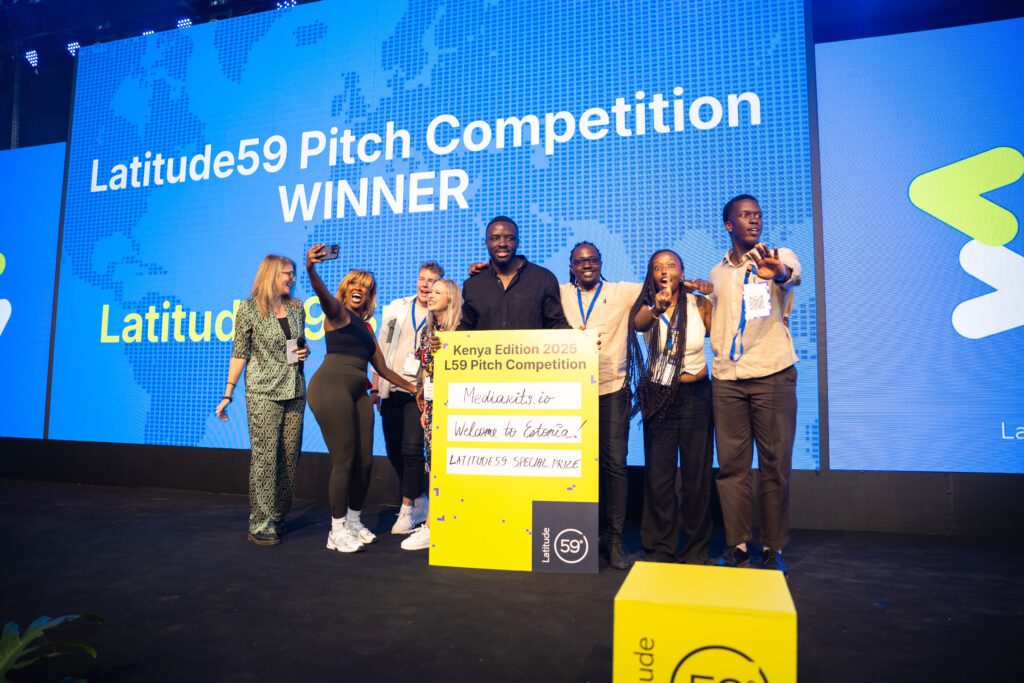
Latitude59, the country’s flagship technology conference, is where much of this becomes visible to the outside world: investors, founders, policymakers, and buyers arriving in Tallinn to see what the next chapter looks like. The answer, this year, involves drones, ultracapacitors, autonomous ground vehicles, advanced FinTech innovations and much more.
Estonia is not waiting to show you what’s next. It is already shipping it. Come see for yourself!